"If you’re visiting Rotorua, and want a real Māori cultural experience, you must visit the Mitai Māori village! The Whanau was so knowledgeable and I learnt a lot about my culture. It was such an amazing experience and the food was unreal!"
Rotorua, New Zealand
Rotorua Hāngī Experience — Māori Cultural Evenings Compared
Watch the hāngī lifted from the earth oven, hear the haka in a carved meeting house, then eat. Compare every Rotorua Māori cultural evening — Mitai, Te Pā Tū, Te Puia and Whakarewarewa — before you book.
Top pick
From
$101
per person
Free cancellation
- 4.7 / 5 4,162+ Reviews
- 3 hours Duration
- 4,121 Guest Reviews
- Earth Oven Cooked On Site
- Free Cancellation
The Experience
The Mitai Māori Village Evening
Rotorua's most-reviewed hāngī evening, and the one where you actually watch the earth oven opened.
Highlights
- Watch the hāngī lifted from the earth oven before you eat it
- Pōwhiri welcome and wero challenge, with a chief chosen from your group
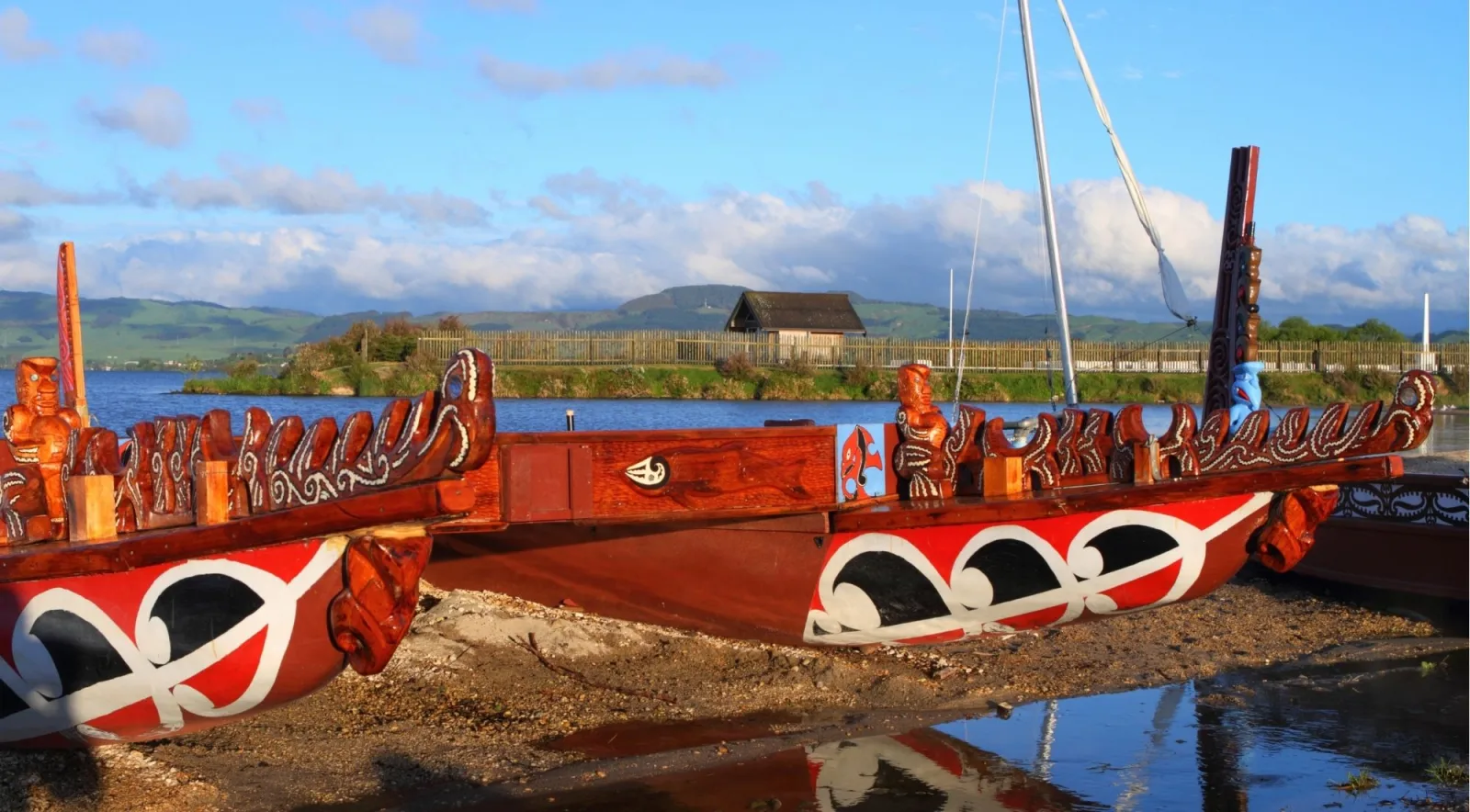
- Warriors paddle a traditional waka down the Wai-o-whiro stream
- Full cultural concert — haka, waiata, mōteatea and poi
- Guided bush walk to a sacred spring and wild glow worms
What's Included
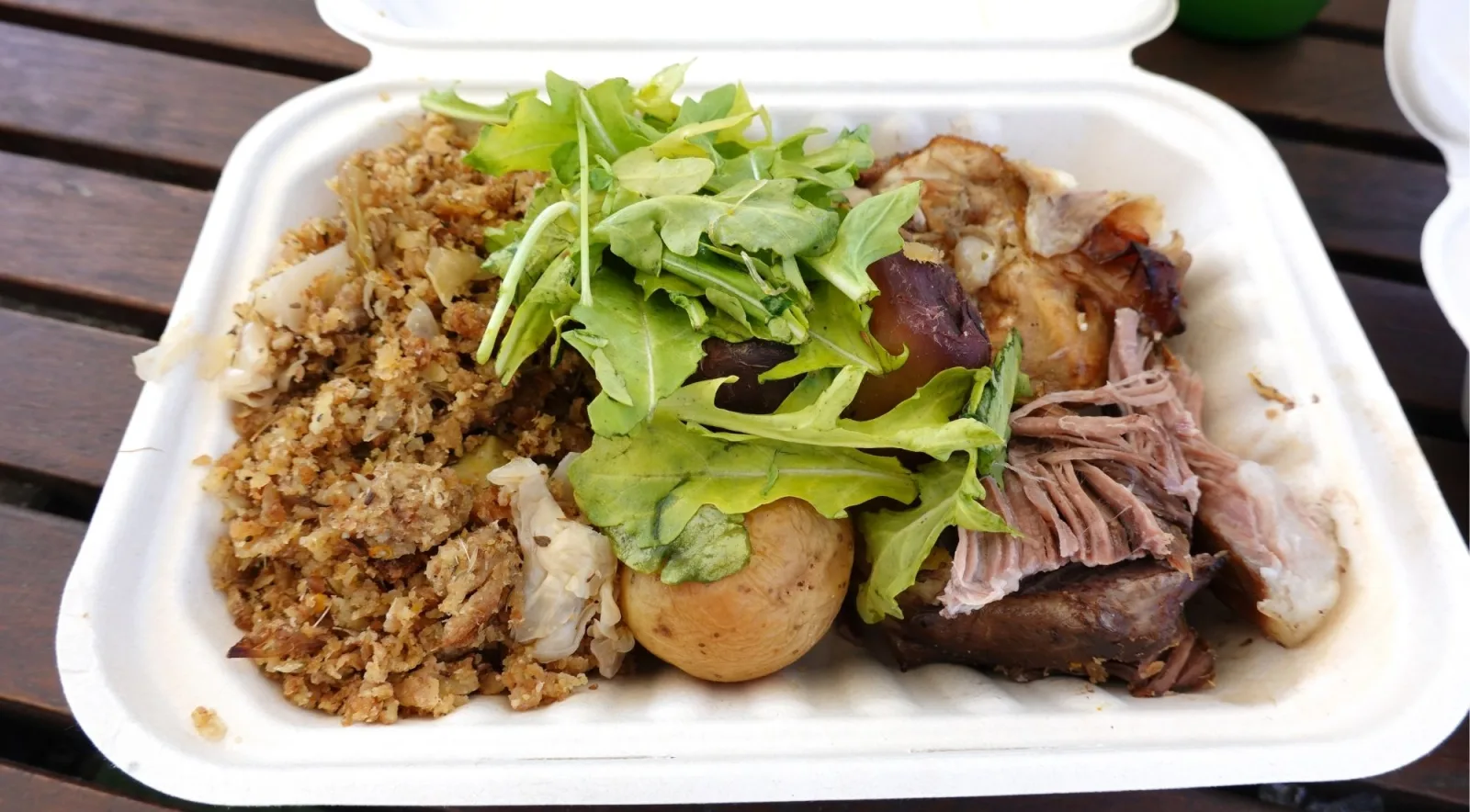
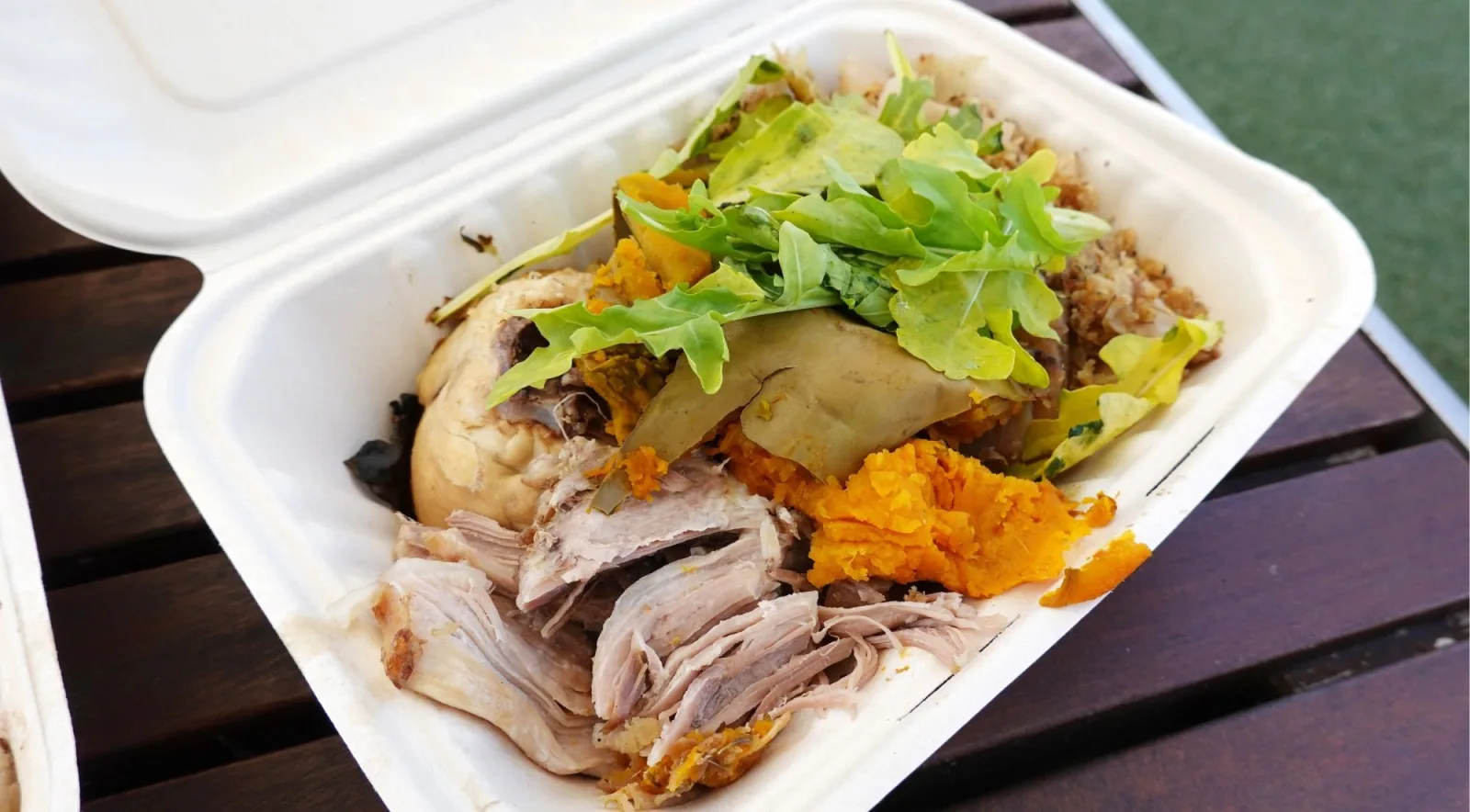
- Hāngī buffet dinner cooked in the traditional earth oven
- Traditional pōwhiri (welcome ceremony) and wero (challenge)
- Waka (war canoe) performance on the Wai-o-whiro stream
- Cultural performance featuring haka, waiata, mōteatea and poi
- Guided village experience with cultural storytelling
- Visit to the sacred spring, Te Puna Tapu o Tūhoe
- Native bush walk with glow-worm viewing
- Poroporoaki (traditional farewell)
- Hotel pickup and drop-off within Rotorua (selected options, subject to availability)
- Free on-site parking
Book Your Experience
Check Availability & Prices
Select your preferred date and time. Instant confirmation — free cancellation up to 24 hours before departure.
How Booking a Rotorua Hāngī Works
Four steps from choosing an evening to sitting down to the kai.
Pick the Evening That Matches What You Want
An earth-oven lifting, a four-course chef's menu, and a geyser at dusk are three different nights out. Our comparison guide sets them side by side so you book the one you actually came for.
Check Live Dates and Prices
Rotorua's cultural evenings run nightly and sell out in the December-to-February peak. The date picker shows real availability and the current per-person price for the night you want.
Reserve With Free Cancellation
Book through GetYourGuide and you get instant confirmation, a mobile voucher, and free cancellation up to 24 hours before — useful when a Rotorua itinerary shifts.
Turn Up Early, Dressed for Outdoors
Sittings start between 5pm and 7.30pm, and much of every evening is outside. Arrive on time for the pōwhiri — the welcome is the one part you cannot join late.
Can't Make These Dates?
Browse More Available Options
Find a tour that fits your schedule — all with instant confirmation and free cancellation.
How the Evening Actually Runs
What a Rotorua Hāngī Evening Actually Looks Like
Here is the part most first-timers get wrong: this is not a dinner show with a support act. You are formally welcomed onto someone's ground, hosted, fed and farewelled — and the meal lands in the middle of the evening, not at the end. Sittings start between 5pm and 7.30pm, so do not hold a restaurant booking for the same night. This is the shape of the evening at Mitai Māori Village, the fullest version of the traditional format.
- Arrive before dark — Check in at 196 Fairy Springs Road, ten minutes from central Rotorua, with free parking on site. Hotel pickup runs on selected booking options. Arrive at the stated time — the welcome cannot restart for latecomers.
- Choose a chief — Your group nominates one person to represent it. It is a real role, not a gag: your chief accepts the challenge on everyone's behalf. Someone always volunteers.
- The wero — the challenge — A warrior advances armed and unmistakably hostile, and lays down a token. Your chief picks it up while holding eye contact, signalling that you come in peace. The aggression is formal, not theatre.
- Warriors on the water — A traditional waka comes down the Wai-o-whiro stream in the half-light, the crew paddling and chanting as they pass. This is the shot everyone photographs.
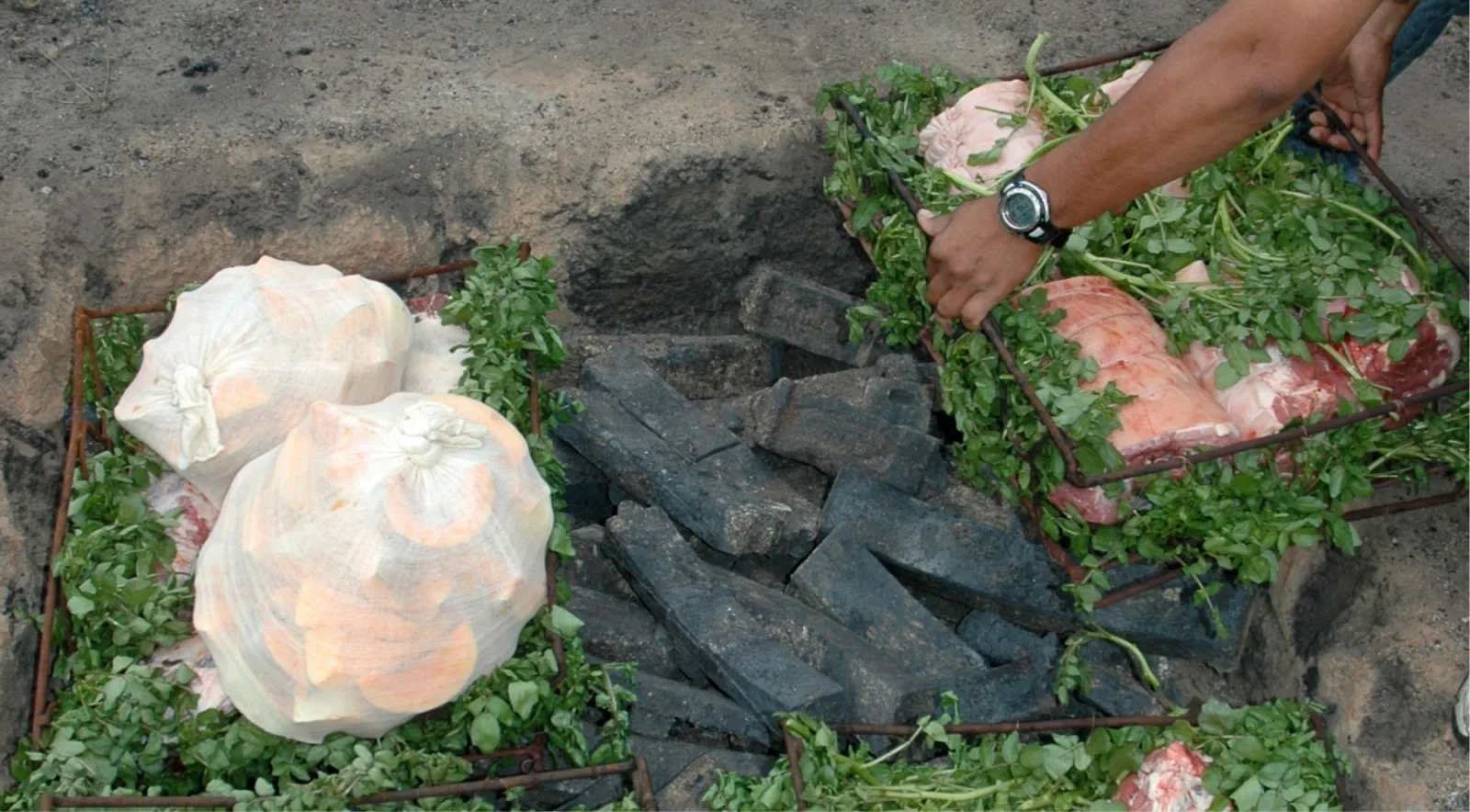
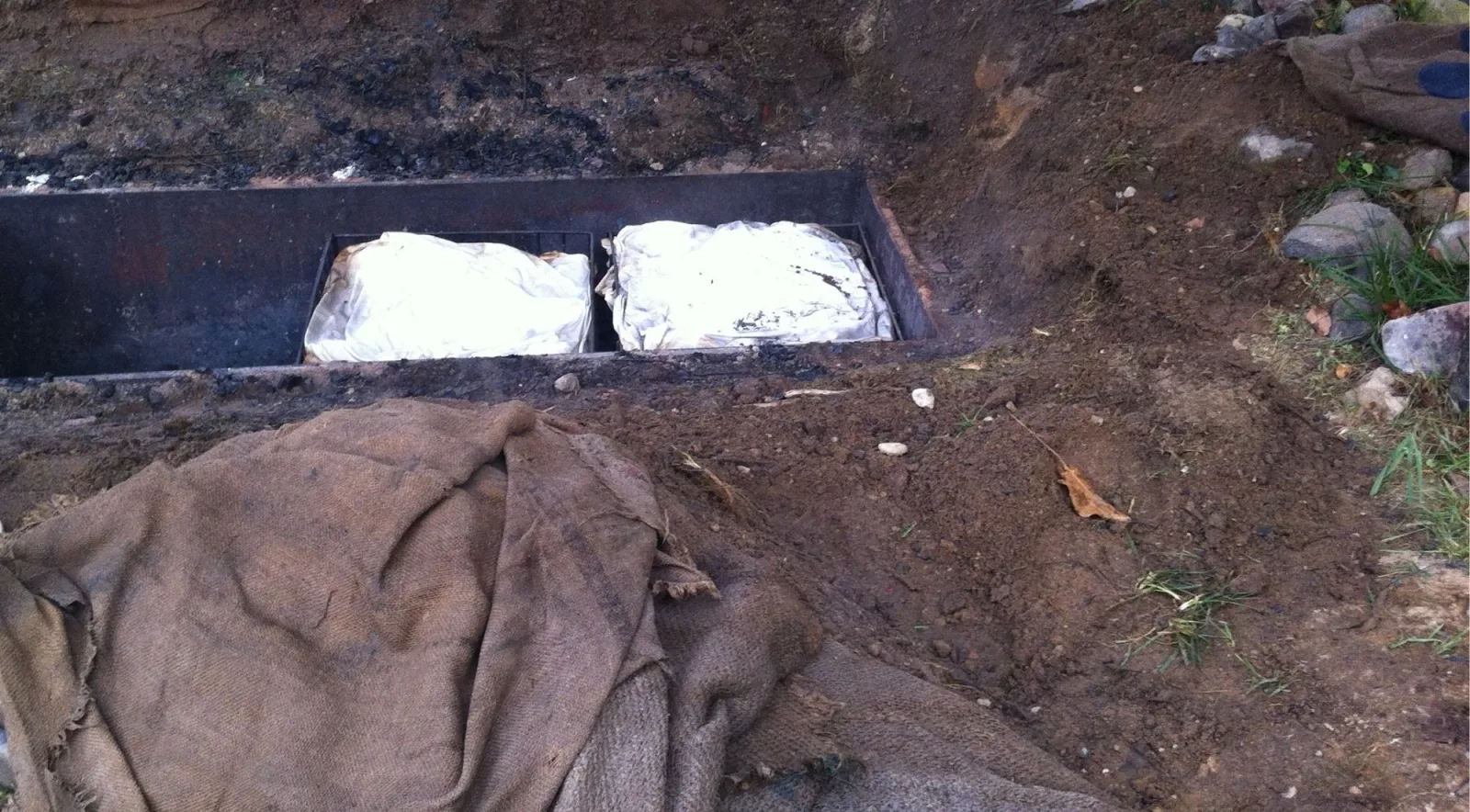
- The hāngī comes out of the ground — The earth is raked back and the baskets are lifted in a column of steam, three hours after the pit was sealed. At Mitai this happens before you eat — it is the point of the evening, not the dessert.
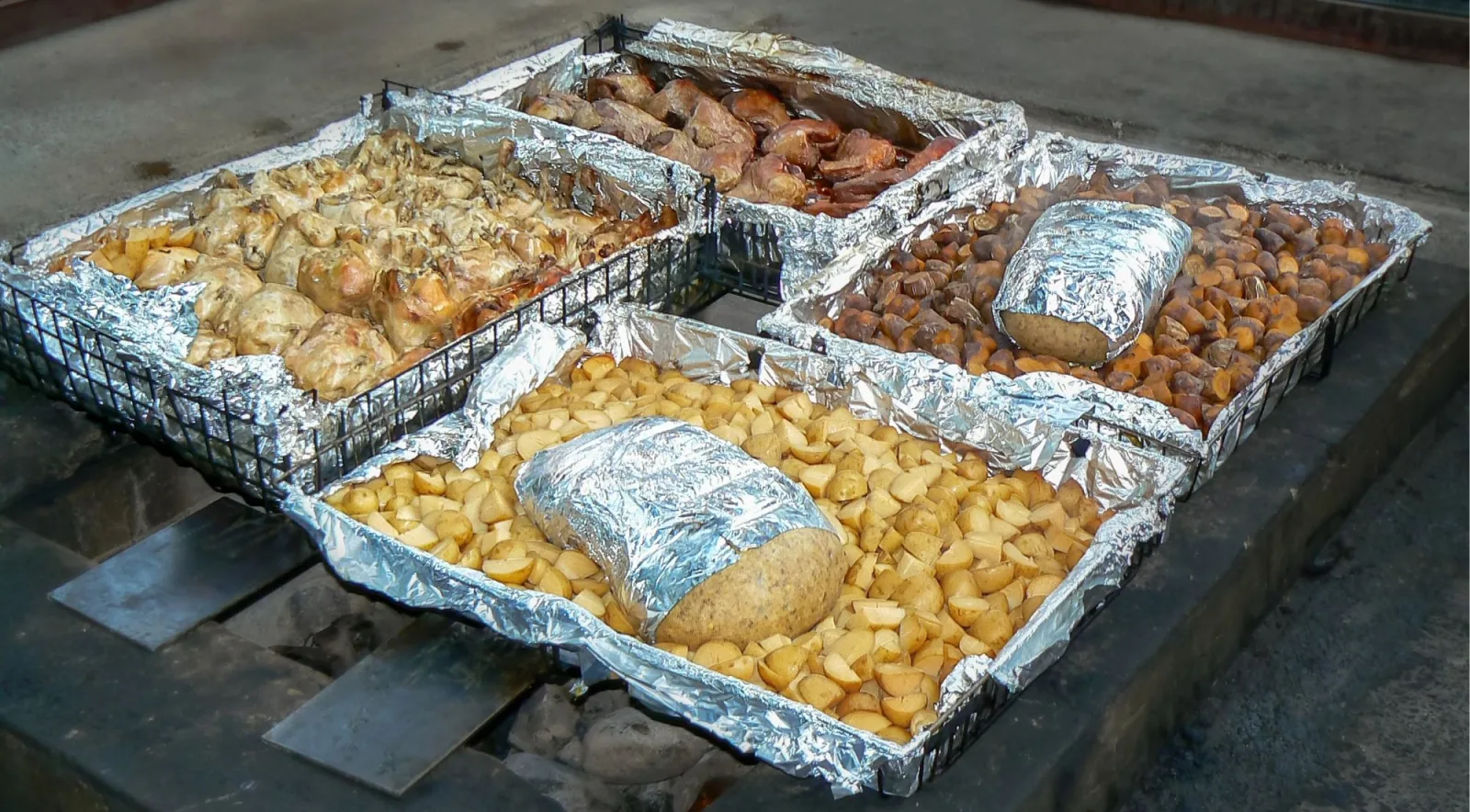
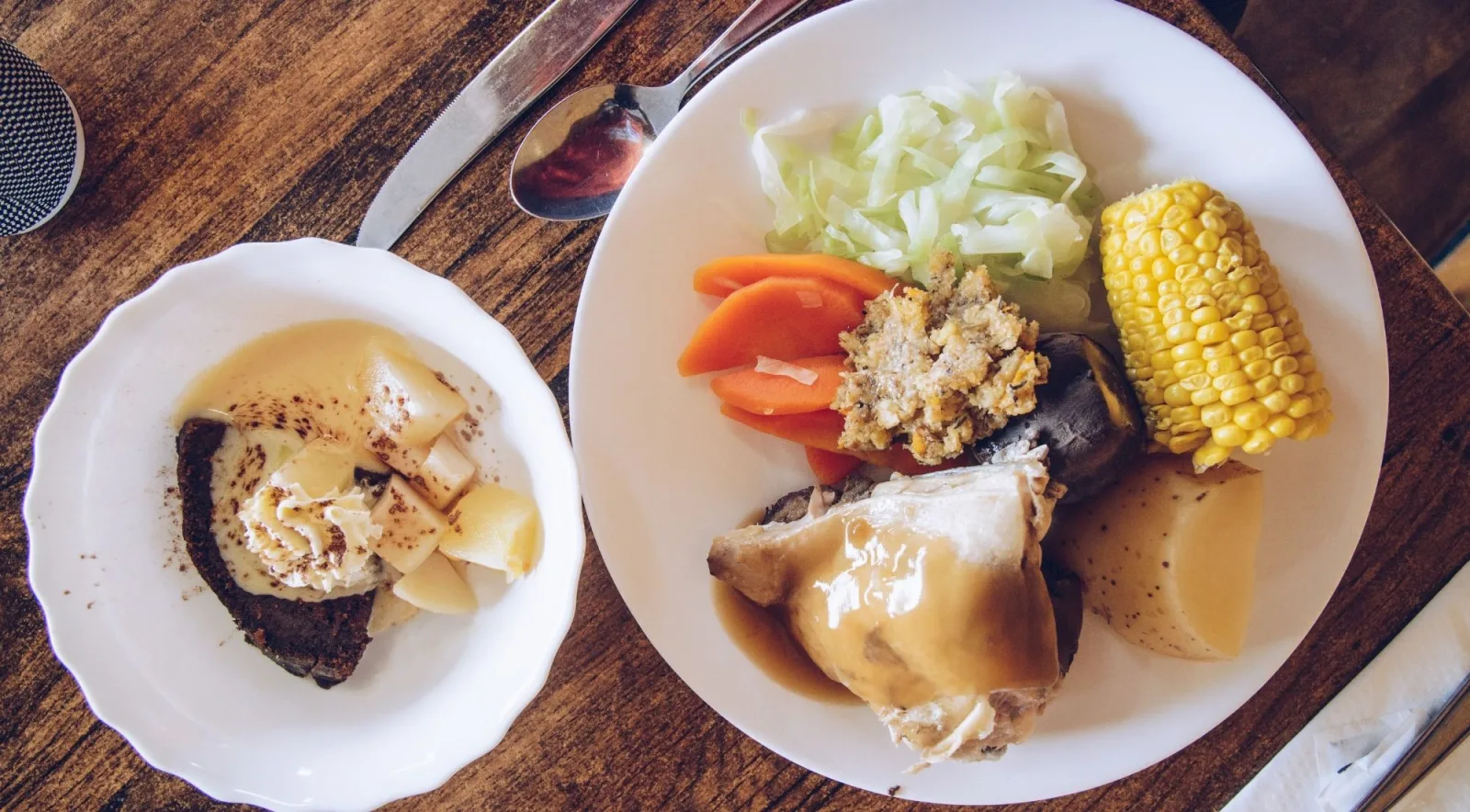
- The concert, then the kai — Haka, waiata, mōteatea and poi, with the storytelling that explains what each one is for — then the hāngī buffet: meats and vegetables from the pit, salads and desserts.
- Glow worms and the farewell — A guided bush walk to the sacred spring Te Puna Tapu o Tūhoe and a natural glow-worm display, then the poroporoaki — the formal farewell — closes the night at about the three-hour mark.
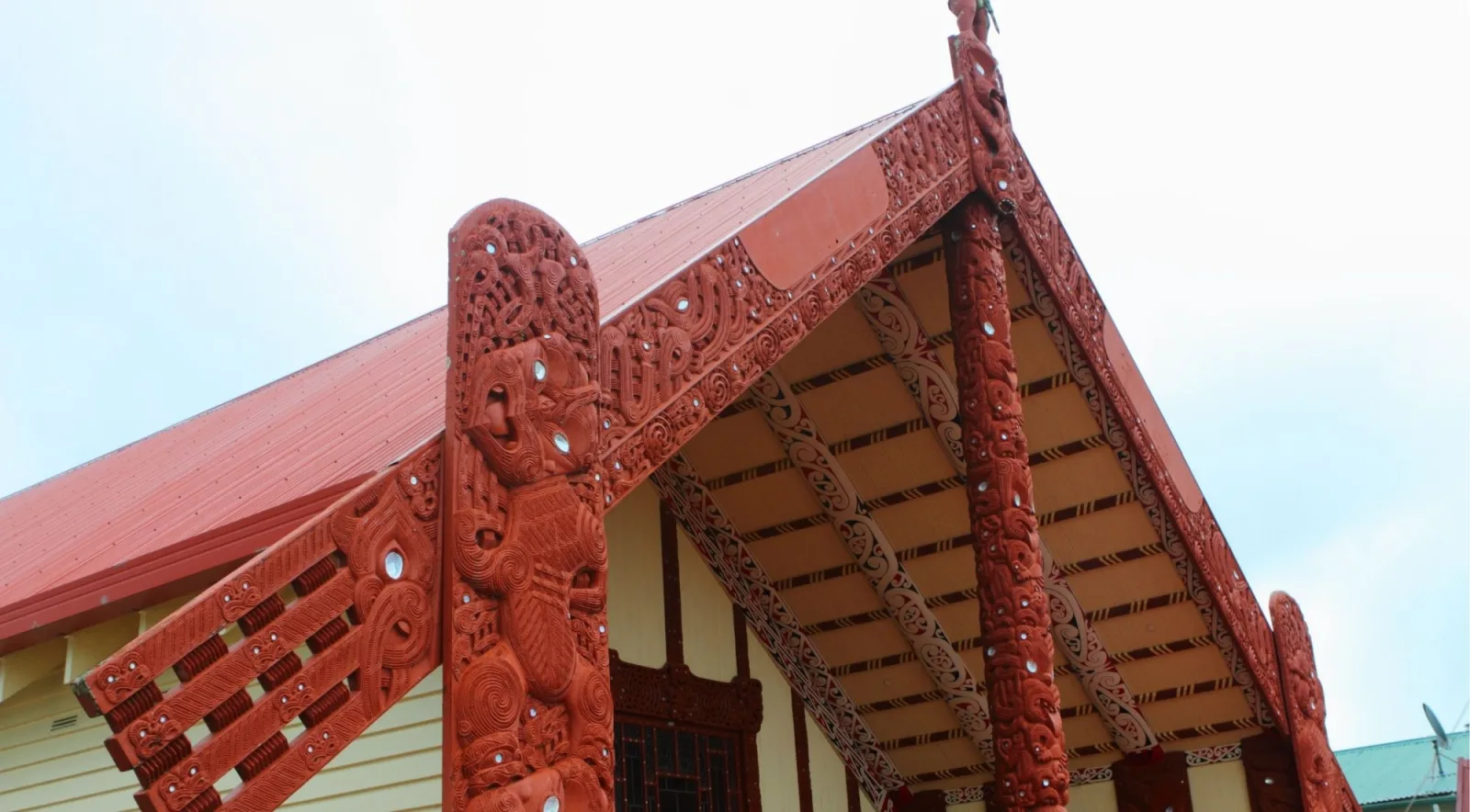
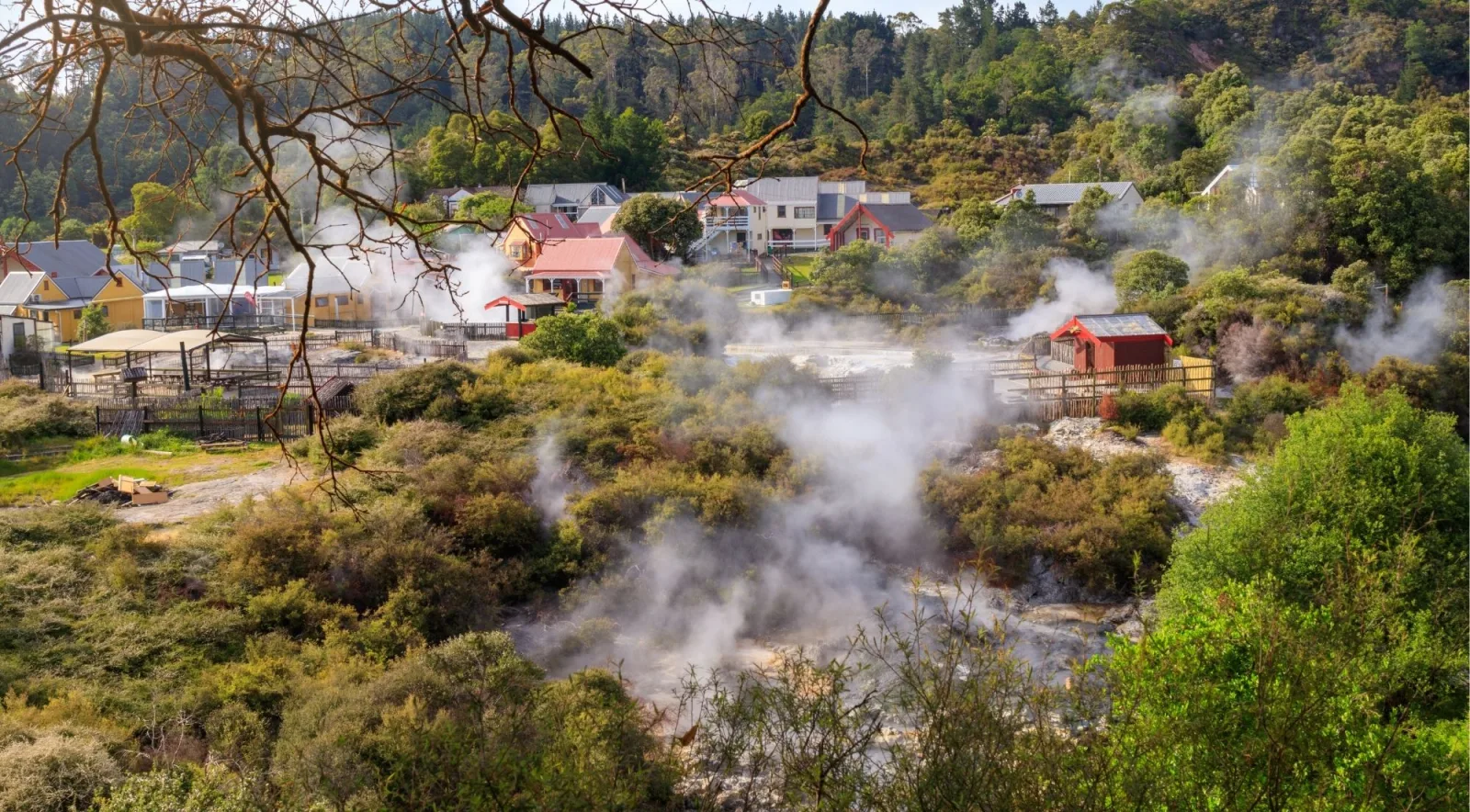
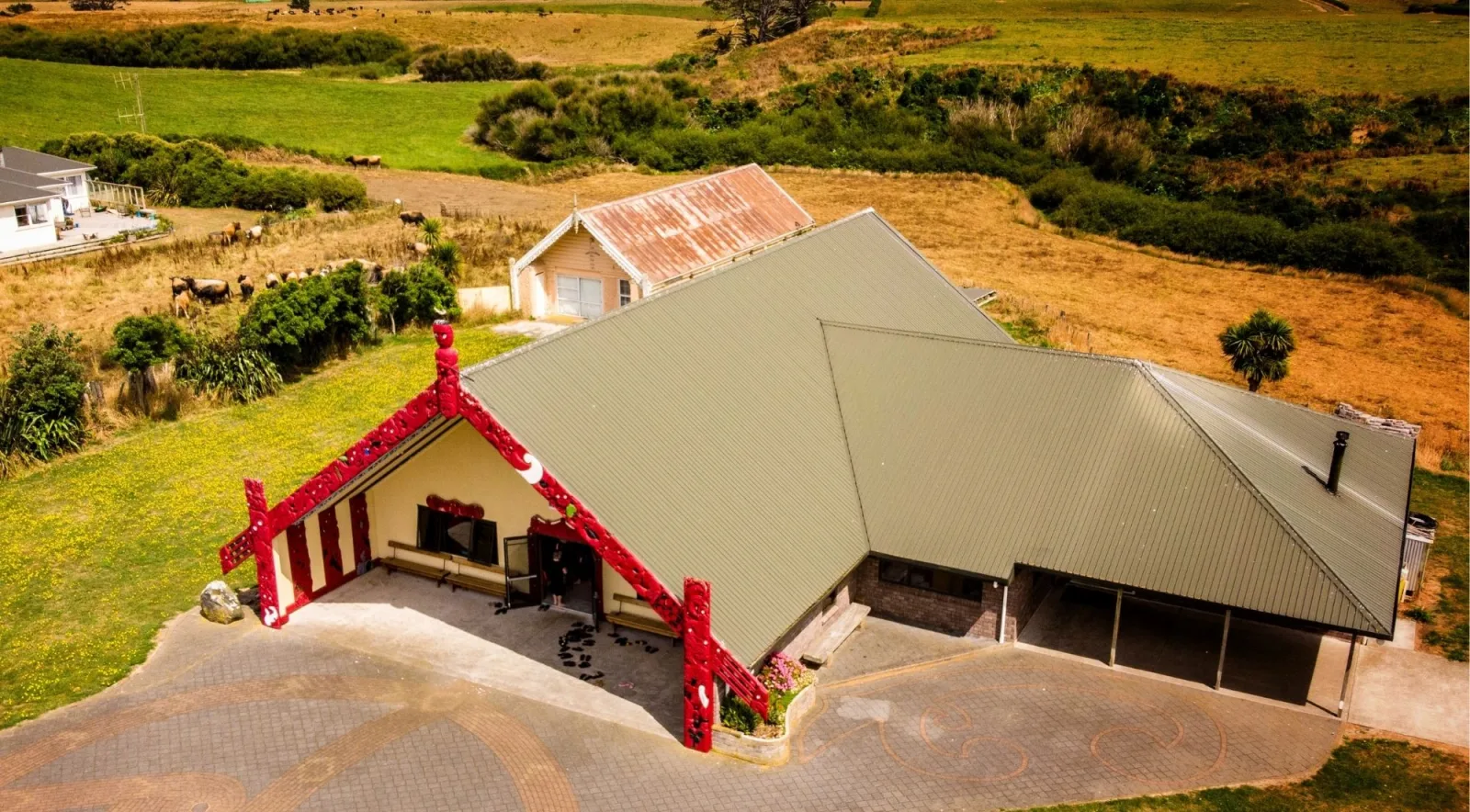
Photo Gallery
Inside a Rotorua Hāngī
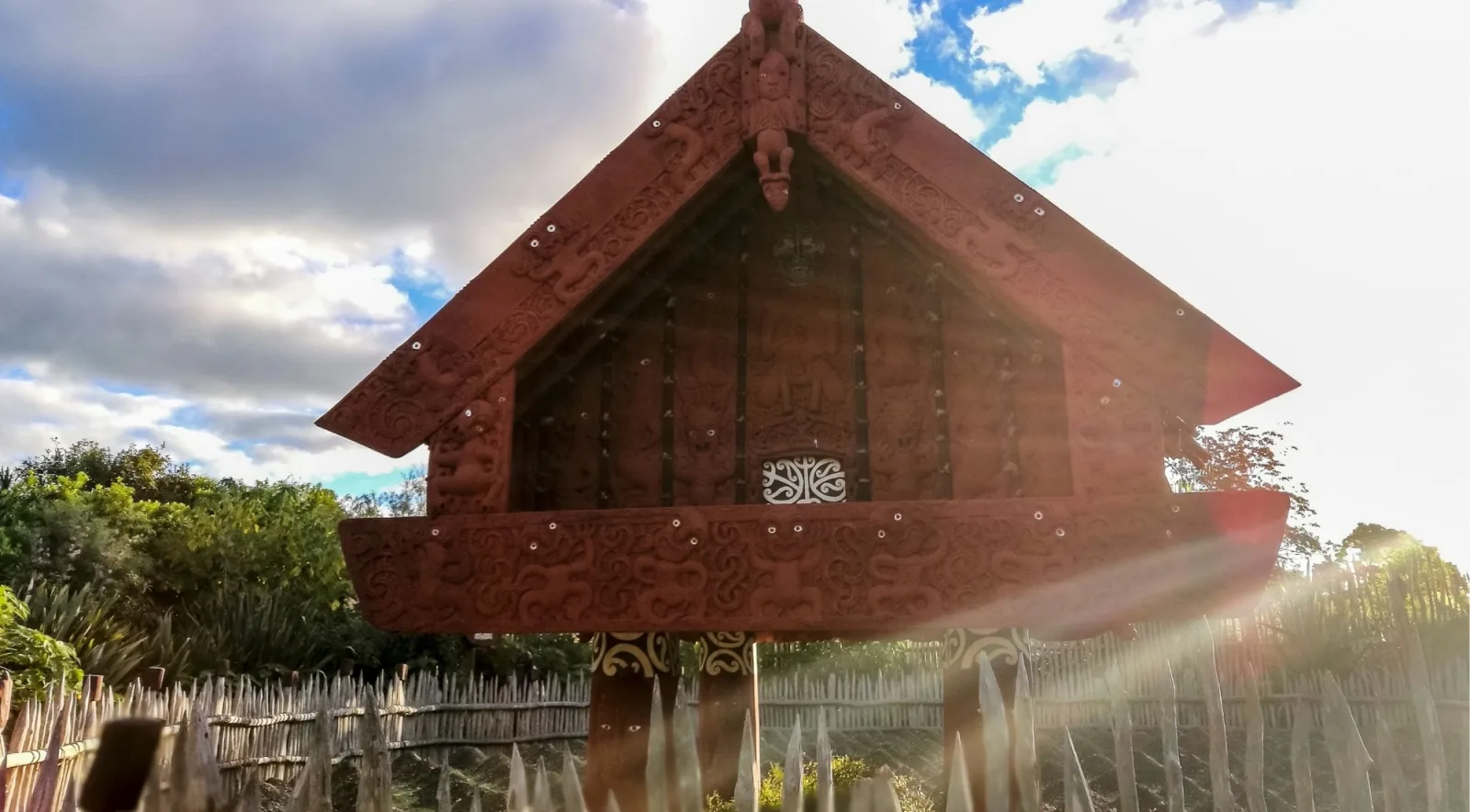
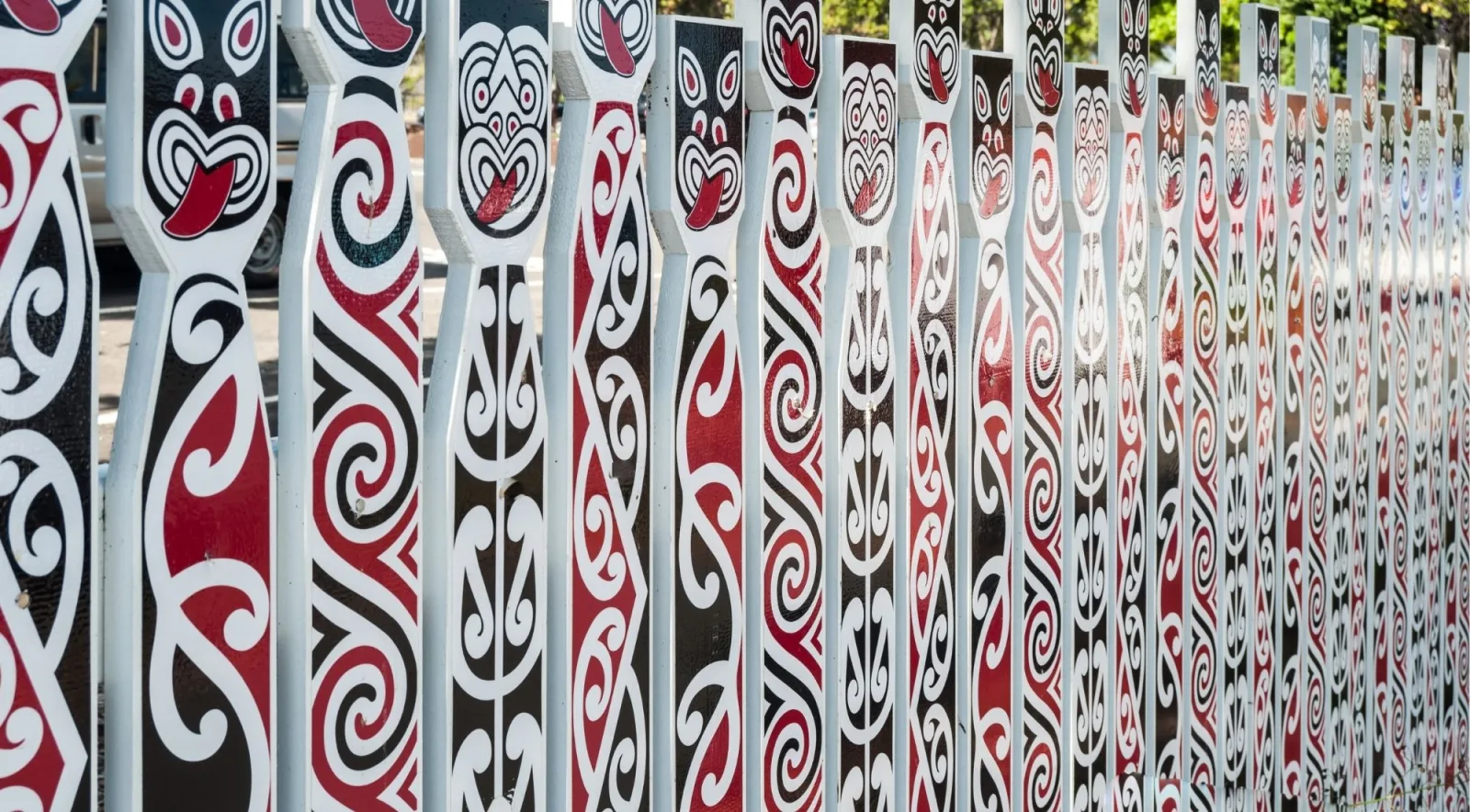
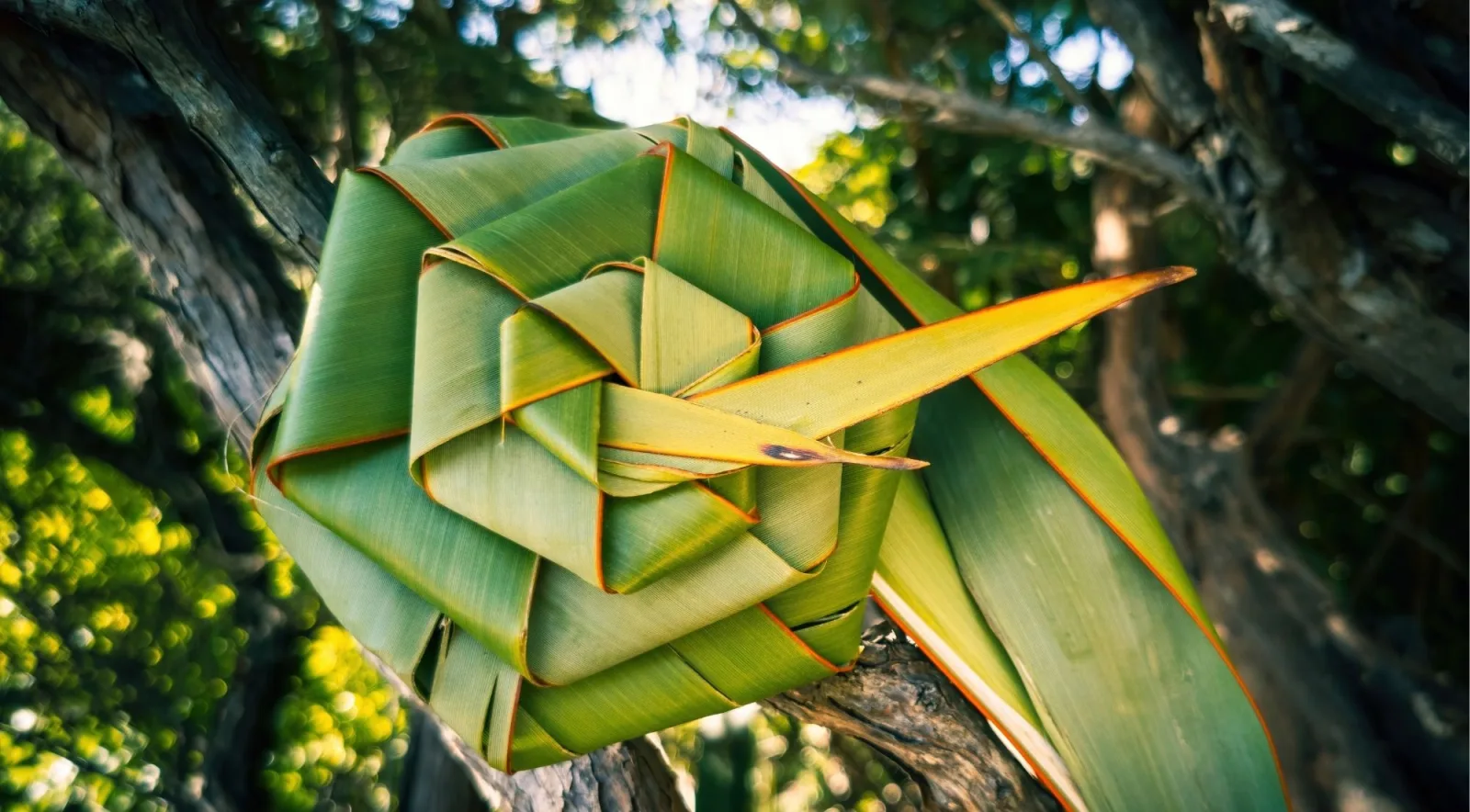
The pit, the kai and the marae — what the evening actually looks like.
Which Rotorua Hāngī Evening Is Actually a Hāngī?
Three ways to spend an evening with Māori culture in Rotorua — and only one of them opens an earth oven in front of you.
| Feature | MOST REVIEWED Mitai Māori Village | Te Puia — Te Pō | Performance Only |
|---|---|---|---|
| What You Eat | Hāngī buffet — meats, vegetables, salads and desserts | Hāngī buffet with kai moana (seafood) and desserts | Nothing — this ticket includes no meal |
| Do You See the Earth Oven Opened? | ✓ Yes — the lifting is a scheduled part of the evening | ✗ No — cooked traditionally, served at the restaurant | ✗ No oven, no food |
| Cultural Performance | Full concert — haka, waiata, mōteatea and poi | 30-minute welcome and performance in a carved meeting house | 30 minutes — haka, poi and stick games |
| Welcome Ceremony | ✓ Pōwhiri and wero, with a chief chosen from your group | ✓ Pōhiri as part of the performance | Not included |
| Also Included | Waka on the stream, sacred spring, glow-worm bush walk | Te Puia admission and hot chocolate at Pōhutu Geyser after dark | Village entry and the guided tour are separate tickets |
| Length | About 3 hours | About 2 hours 45 minutes | 30 minutes |
| Hotel Pickup | On selected options, subject to availability | Not available — meet on site, free parking | Not available — meet on site |
| Wheelchair Access | Village yes; bush walk limited — forest exit is via stairs | ✓ Accessible — advise the operator when booking | Village is a geothermal plateau with uneven ground |
| Free Cancellation | ✓ Up to 24 hours before | ✓ Up to 24 hours before | ✓ Up to 24 hours before |
| Starting Price | From $101/per person | From $121 per person | From $21 per person |
| Check Availability | See Dates | See Dates |
More Options
Other Rotorua Māori Experiences
From a $21 performance to a four-course forest banquet — every option we cover, cheapest first.
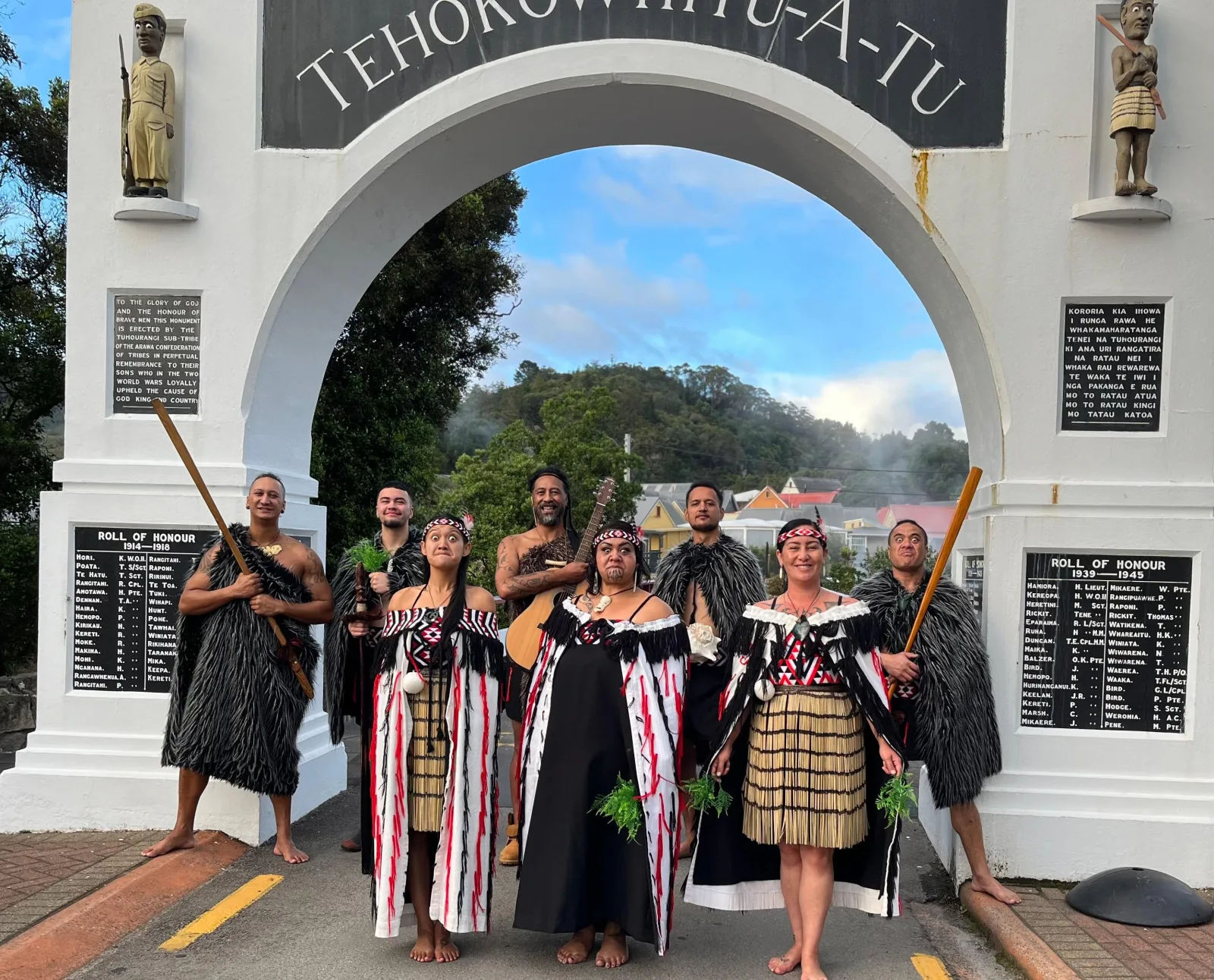 LOWEST PRICE
Whakarewarewa: Māori Cultural Performance with Dancing
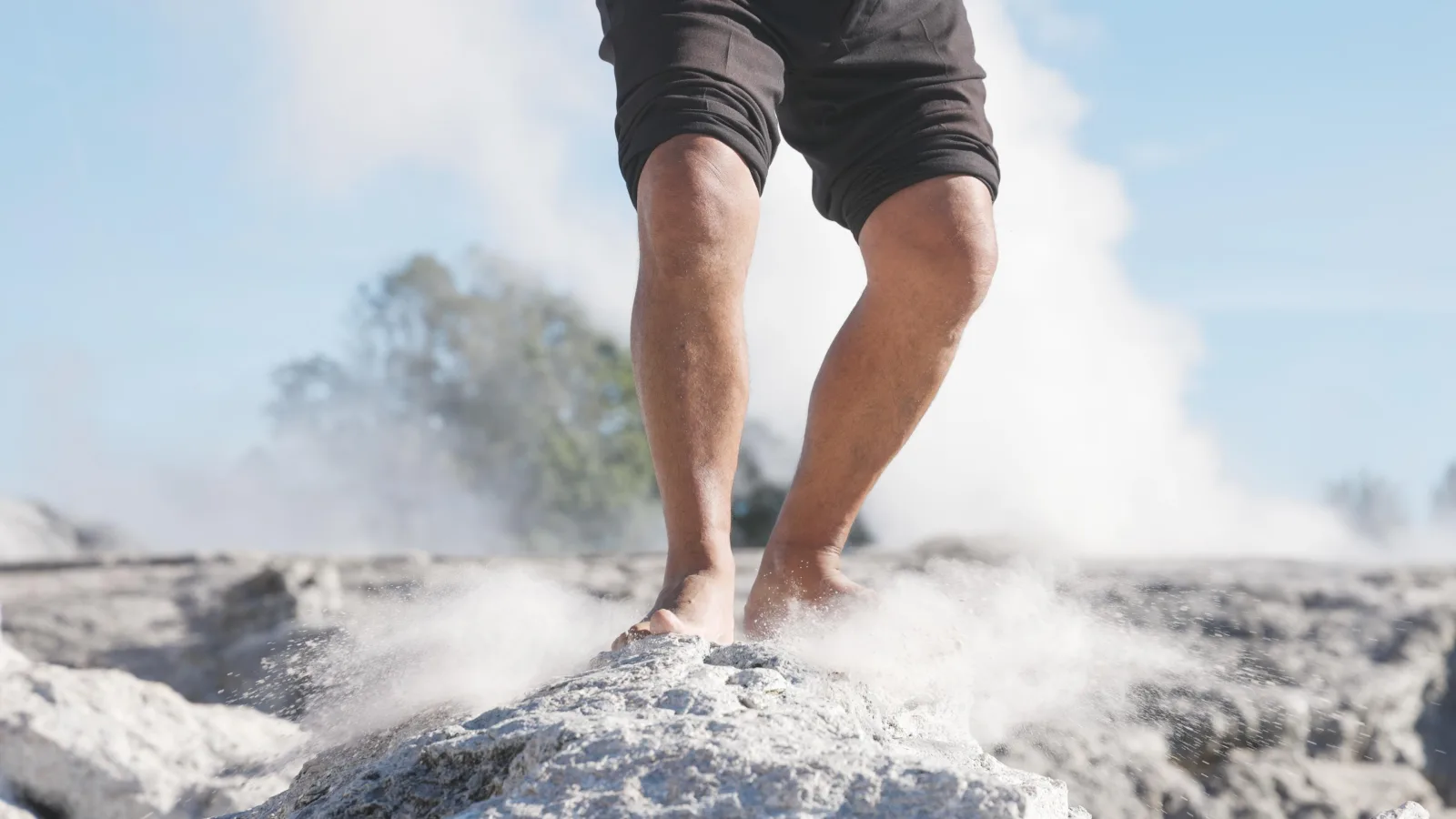 LIVING VILLAGE
Whakarewarewa: Guided Tour of the Living Māori Village
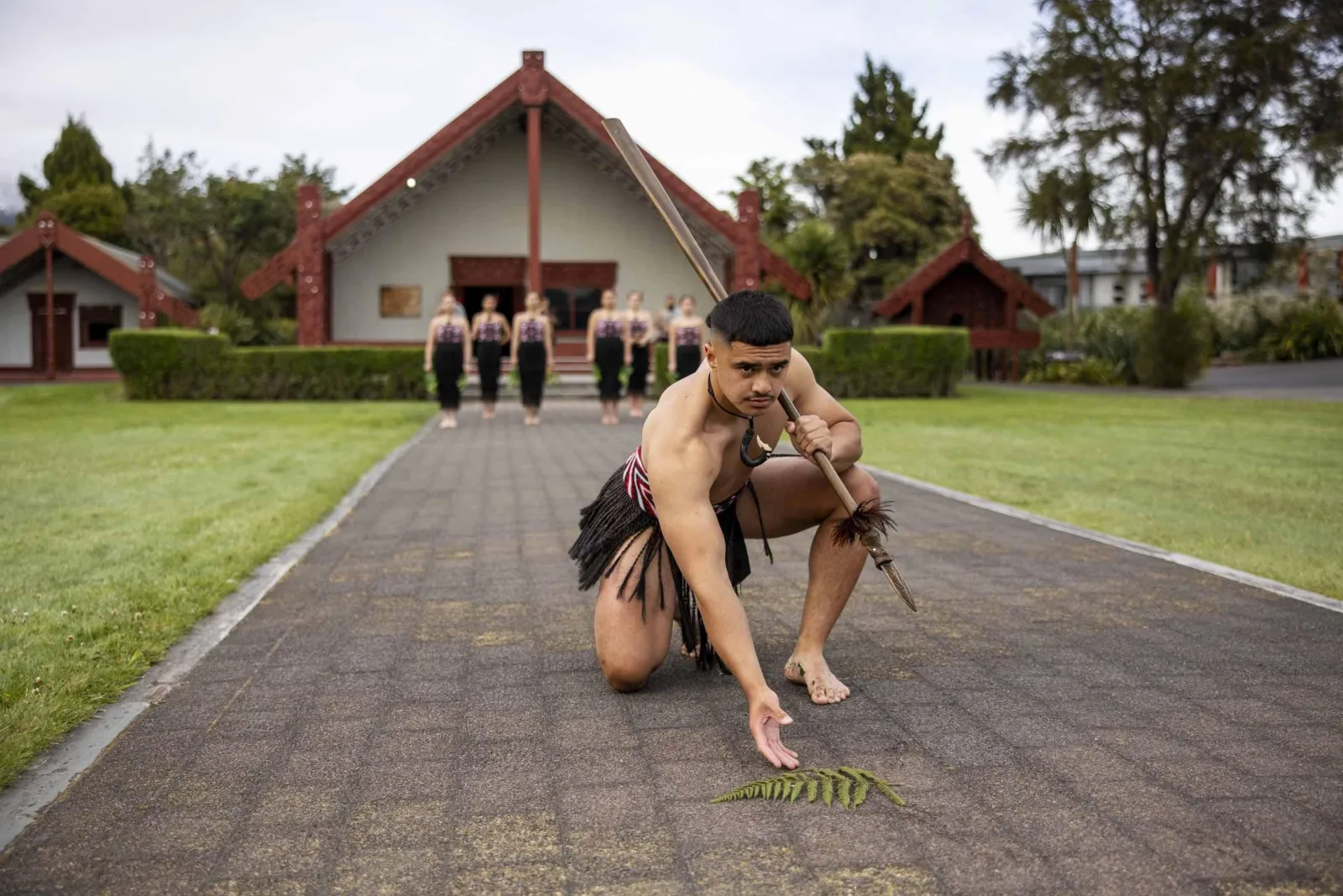 BEST IN DAYLIGHT
Te Puia Te Rā: Guided Day Tour with Haka Cultural Performance
 GEYSER AT NIGHT
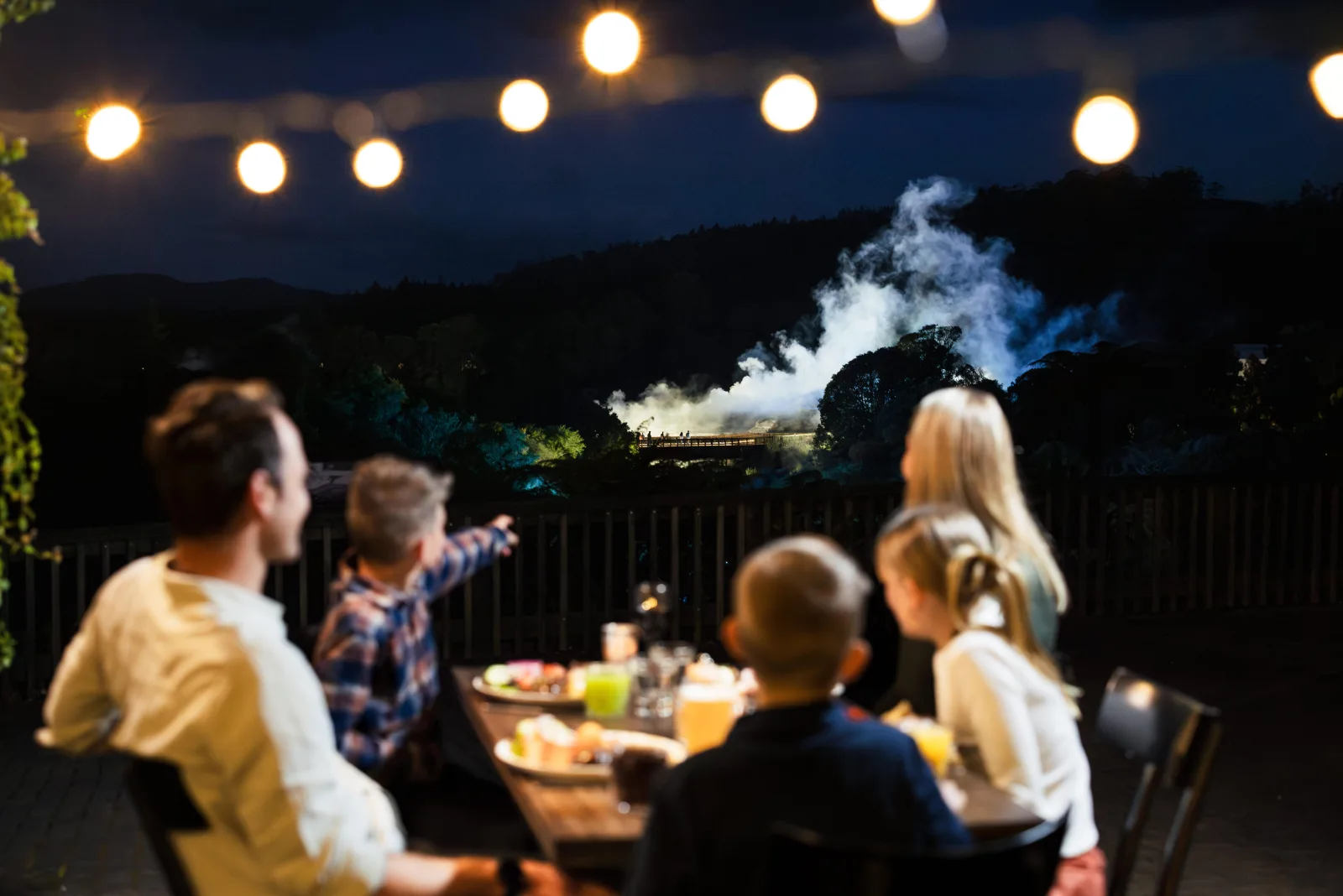
Te Puia Te Pō: Indigenous Evening Experience with Haka & Hāngī
 PREMIUM DINNER
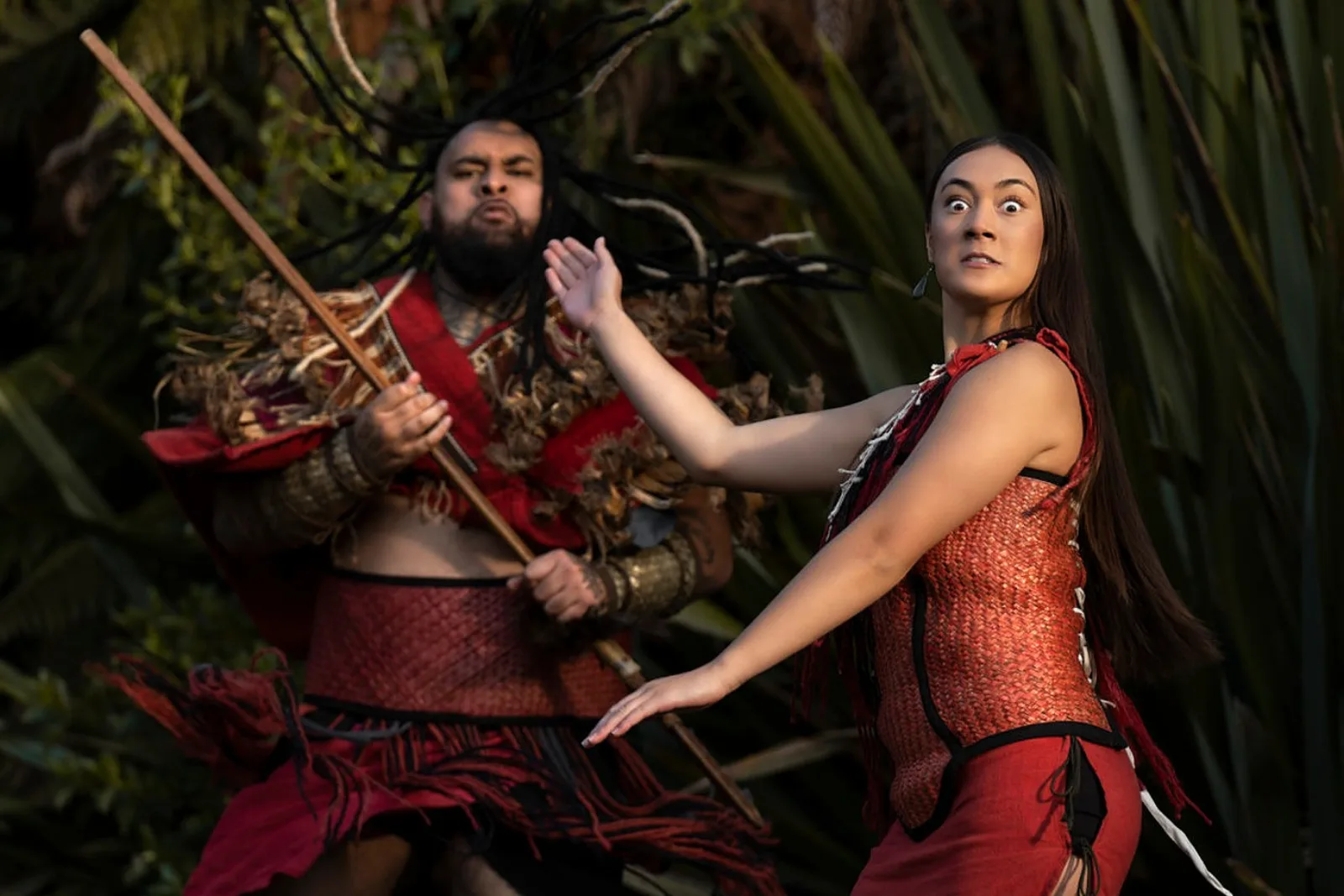
Te Pā Tū: Māori Cultural Experience with Four-Course Dinner
The Complete Guide
How to Choose a Rotorua Hāngī Experience
What a hāngī actually is, which Rotorua evenings really cook in the ground, and what separates the four operators.
A hāngī is not a style of cooking so much as a piece of engineering. You dig a pit, burn a fire down onto volcanic stones until they glow, rake out the embers, and lower baskets of meat and root vegetables onto the hot rock. Wet cloth and sacking go over the top, then earth seals the whole thing. For the next three hours nothing happens that you can see — and that patience is the point. Meat that comes out of a hāngī has been steamed in its own moisture under pressure, which is why it falls apart, and why it tastes faintly of smoke and soil in a way no oven reproduces.
Rotorua is the one place in New Zealand where that method never became a special occasion. The town sits on the Taupō Volcanic Zone, where the ground itself runs hot, and at Whakarewarewa the residents have used steam vents and boiling pools as everyday kitchen equipment for generations. When you book a “hāngī experience” here, you are booking a place at a table that has been set the same way for a very long time.
Not every “hāngī dinner” is cooked in the ground
This is the single most useful thing to know before you pay, and no operator’s booking page says it plainly.
Rotorua’s cultural evenings fall into three groups. Mitai Māori Village still lifts a genuine earth oven in front of guests — the uncovering of the pit is a scheduled part of the night, and it happens before dinner rather than as an after-thought. Te Puia’s Te Pō serves a hāngī buffet at its Pātaka Kai restaurant overlooking the thermal valley: the food is traditionally cooked, but you do not watch the baskets come up. Te Pā Tū — the operation founded by the Tamaki brothers in 1989 and relaunched under its current name — serves a four-course menu designed by its own chefs, drawing on hāngī technique rather than reproducing it.
All three are worth doing. They are simply not the same evening, and a visitor who books the premium one specifically to see an earth oven opened will be disappointed by an excellent dinner. Our guide to real hāngī vs steam box vs fusion feast sets the three cooking methods side by side, including the geothermal steam boxes that are Rotorua’s own tradition rather than a shortcut.
The four operators, and what actually separates them
Mitai Māori Village is the volume leader by a wide margin — more than four thousand verified reviews, roughly three times the next operator. The evening runs about three hours in native bush ten minutes from town: a pōwhiri and a wero at the gate, warriors paddling a waka down the Wai-o-whiro stream, the concert, the hāngī, and a bush walk to a sacred spring and a natural glow-worm display. It is the most complete version of the traditional evening and sits in the middle of the price range — our full Mitai review covers the crowds and the review-score gap as well as the food.
Te Pā Tū — formerly Tamaki Māori Village — is the produced one, and the most expensive. Its evening follows the maramataka — the Māori lunar calendar — so the menu and the repertoire shift with the season instead of running a fixed script. Guests eat in a forest clearing under towering tawa trees with bonfires burning, and hotel transfers are built into the price, which accounts for a good part of the gap — our full Te Pā Tū review weighs whether the rest of it is worth paying.
Te Puia’s Te Pō buys you something neither of the others can: Pōhutu, the largest active geyser in the southern hemisphere, erupting after dark while you drink a hot chocolate on the terrace. The performance takes place in Te Aronui a Rua, a carved meeting house, and reserve admission is included. It is also the most accessible of the evening experiences.
Whakarewarewa is the daytime alternative and the cheapest way in. The guided hour through the living village is led by descendants of the guiding families who effectively founded New Zealand tourism, and your ticket includes a corn cob cooked in a geothermal pool — the most literal taste of earth-cooked kai in Rotorua, for the price of a coffee and a sandwich. A separate half-hour performance covers haka, poi and stick games without a meal attached. If you would rather eat at midday, see hāngī lunch or dinner; for the lowest-cost route to a hāngī, see the cheapest way to eat one.
Which one you should book
Most first-time visitors should book Mitai: it is the most-reviewed, it is mid-priced, and it is the only evening built around the earth oven itself. Pick Te Pā Tū if the food matters more than the archaeology, or if you want transfers handled. Pick Te Puia’s Te Pō if the geyser is the draw, or if anyone in your party needs step-free access — our dietary and accessibility guide covers vegetarian, vegan, gluten-free and halal requests as well. Pick Whakarewarewa if you are travelling on a budget or your evenings are already spoken for. The full comparison — price, length, reviews, what is included and who each one suits sets all eight options side by side. If your question is simply which hāngī is best, our best hāngī in Rotorua guide ranks the four operators by how the food is actually cooked, and Te Pā Tū vs Mitai settles the head-to-head most visitors end up weighing.
Practical things worth knowing
Sittings start early — between 5pm and 7.30pm depending on the operator and the season — and you eat roughly halfway through, not at the end. Do not book a late sitting on a night you have also reserved a restaurant.
Much of every evening happens outdoors. Rotorua nights are cool even in February, the amphitheatres and geyser terraces are open to the sky, and the walks are on unpaved ground. A warm layer and shoes with grip matter more than anything else you could bring.
Book ahead between December and February. These are fixed-capacity evenings running once or twice a night, and the peak-season sittings genuinely sell out. Outside those months a few days’ notice is usually enough.
Finally, arrive on time. The pōwhiri is a formal welcome onto the host’s ground, and it is the one part of the evening you cannot slip into late. Turning up while it is under way is the only real way to cause offence — and the operators, without exception, would rather you asked a question than guessed.
Guest Reviews
What Guests Say
4.7/5
from 4162 verified GetYourGuide guests
Ratings and review counts are the tour operators' live figures on GetYourGuide and may shift slightly day to day.
"The food was amazing and the entertainment was also delightful. Overall, a worthwhile experience!"

"Excellent cultural experience. Exceeded expectations, and great value."
"We all had a great experience. It was learning the different culture for some of us and the food was absolutely delicious! Highly recommend"
"Great night. I’ve seen a few other Māori experiences but tips one was by far the most enjoyable and educational."
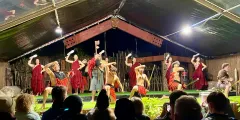
"A wonderfully unique experience with a delicious buffet and entertainment with an insight into Maori culture."
"Fabulous experience. Great food, unreal cultural experience. Would recommend"
"It was fantastic to see and hear about Maori culture and traditions, through song and storytelling. This tour was above expectations with the iwi warriors coming down the river in a waka taua (war canoe)."
Read all 4162 verified reviews
See All ReviewsSee the Hāngī Lifted, Then Sit Down to It
Rotorua's most-reviewed Māori cultural evening — pōwhiri, waka, haka, a hāngī buffet cooked in the ground, and a glow-worm bush walk to finish. Free cancellation up to 24 hours before. Starting from $101 per person.
Check Availability & BookRotorua Hāngī Experience — Frequently Asked Questions
What a hāngī is, which evening to book, and everything worth knowing before you reserve.
A hāngī is a Māori earth oven — a pit of volcanic stones heated in a fire, with baskets of meat and root vegetables lowered onto the hot rock, sealed under wet cloth and earth, and steamed for around three hours. The word describes both the oven and the meal that comes out of it. Our guide to how a hāngī works walks through the method step by step.
For most first-time visitors, the Mitai Māori Village evening from $101 — it is the only one where the earth oven is uncovered in front of guests, and it holds over 4,000 verified reviews, roughly three times the next operator. Choose Te Pā Tū if the food matters most and you want hotel transfers included, or Te Puia's Te Pō if you want Pōhutu Geyser erupting after dark. Our full comparison sets all eight options side by side, and Te Pā Tū vs Mitai settles the head-to-head.
No, and this is the most useful thing to know before booking. Mitai lifts a genuine earth oven in front of guests. Te Puia's Te Pō serves a traditionally cooked hāngī buffet you do not see prepared. Te Pā Tū serves a four-course menu designed by its own Māori chefs, drawing on hāngī technique rather than reproducing it. All three are excellent evenings — they are simply not the same thing. Our best hāngī in Rotorua guide compares all four operators by cooking method, and real hāngī vs steam box vs fusion feast explains what separates an earth oven from a geothermal steam box.
From $21 for a 30-minute cultural performance with no meal, up to $173 for Te Puia's combined day tour and evening. The hāngī dinner evenings themselves run from around $101 (Mitai) through $121 (Te Puia's Te Pō) to $167 (Te Pā Tū, transfers included). Prices are the operators' live GetYourGuide figures and shift occasionally.
Between two and a half and four hours depending on the operator — Te Puia's Te Pō runs about 2 hours 45 minutes, Mitai about 3 hours, Te Pā Tū about 3.5 hours including hotel transfers. You eat around the middle of the evening rather than at the end, so do not hold a restaurant booking for the same night.
Sittings begin between 5pm and 7.30pm depending on the operator and the season. Te Pā Tū runs a 5.00pm sitting year-round plus 6.15pm and 7.30pm sittings from October to April. Arrive on time — the pōwhiri, the formal welcome, is the one part of the evening you cannot join late.
A warm layer and closed shoes with grip. Much of every evening is outdoors — open-air amphitheatres, geyser terraces and unpaved bush trails — and Rotorua nights are cool even in January. There is no dress code beyond comfort and warmth. Our night-of guide covers the rest.
Your group nominates a chief, a warrior lays down a challenge (the wero) which your chief answers by picking up a token while holding eye contact, and the hosts then call the group in with karanga and speeches. It formally moves you from stranger to guest, takes ten to fifteen minutes, and cannot restart for latecomers.
It varies sharply by operator, and everything depends on giving notice at the time of booking. Te Puia's Te Pō offers vegetarian and gluten-free options on request. Te Pā Tū can arrange both but states its kitchen is not coeliac-approved. Mitai says plainly that it cannot provide vegan options. Our dietary and accessibility guide compares all four operators.
Te Puia's Te Pō is the one listed as wheelchair accessible — tell the operator when booking so assistance is arranged for the geyser walk. Mitai's forest bush walk exits via stairs, and Te Pā Tū's amphitheatre and dining area sit on unpaved forest ground.
Te Pā Tū includes return hotel transfers in the ticket price, which accounts for part of its higher cost. Mitai offers pickup and drop-off within Rotorua on selected booking options, subject to availability. Te Puia and Whakarewarewa are meet-on-site, both with free parking. Our hotel pickup guide covers every operator, including how to get there without a car.
Yes. Every Rotorua operator states it runs rain or shine. Performances take place in covered meeting houses or amphitheatres with indoor alternatives; only walking sections such as Mitai's bush trail and Te Puia's geyser terrace are exposed. Bring a rain layer.
About a week ahead for December through February, two to three weeks over Christmas and New Year, and a couple of days in the off-season. These are fixed-capacity evenings running once or twice a night. Free cancellation up to 24 hours before means booking early costs you nothing. See our month-by-month guide.
Arguably more than in summer. A steamed three-hour meal and a bonfire suit cold weather, the geothermal steam over Whakarewarewa and Te Puia is far more visible in cold air, and sittings are quiet enough to book at short notice. Bring a proper coat rather than a fleece.
Not a full hāngī dinner — every one is an evening ticket. The daytime alternatives are the Whakarewarewa village tour from $29, whose ticket includes a corn cob cooked in a geothermal pool, and Te Puia's Te Rā from $56, which covers the geothermal valley and optionally a haka performance but includes no meal.
Yes — it trades as Te Pā Tū. The operation the Tamaki brothers founded in 1989 was rebuilt and relaunched under the new name on the same forest site, with a redesigned evening and a four-course seasonal menu that follows the maramataka, the Māori lunar calendar. What changed, and what didn't.
Yes. These are commercial experiences run by Māori operators for exactly this purpose, and the welcome ceremony exists to bring outsiders in. Observing a little etiquette is all that is asked — shoes off in the meeting house, no food inside it, ask before photographing people, and do not touch carvings.
Booking goes through GetYourGuide, with instant confirmation and a mobile voucher. Every experience on this site offers free cancellation up to 24 hours before the start time, which is useful when a Rotorua itinerary shifts. You pay GetYourGuide directly — this site is an affiliate and never handles your payment details.
Still have questions? Email us at info@rotoruahangiexperience.com
Keep Exploring
Explore More
Every Rotorua hāngī experience and planning guide on this site, in one place.
Rotorua Experiences
Guides
- Hāngī Lunch or Hāngī Dinner in Rotorua: Which Should You Book?
- The Cheapest Way to Eat a Hāngī in Rotorua
- Which Rotorua Hāngī Experiences Include Hotel Pickup?
- Real Hāngī vs Steam Box vs Fusion Feast
- Te Pā Tū Review: Worth the Premium, But It Isn't a Hāngī
- Best Hāngī in Rotorua: Every Option Compared
- Is Tamaki Māori Village Still Open? It's Now Te Pā Tū
- Mitai Māori Village Review: Is It Worth It?
- Te Pā Tū vs Mitai: Which Rotorua Hāngī Should You Book?
- The Best Time for a Rotorua Hāngī Experience
- Rotorua Hāngī: Dietary Requirements and Accessibility
- What Is a Hāngī? How the Māori Earth Oven Works
- What to Expect at a Rotorua Hāngī
- Which Rotorua Hāngī Experience Is Right for You?