Best Places to Eat in Rotorua: Māori Food, Hāngī & Dinner Experiences
Where to eat in Rotorua: Māori hāngī and cultural dinners, geothermal cooking at Whakarewarewa, cheap eats and restaurants, and how to plan your evenings around them.
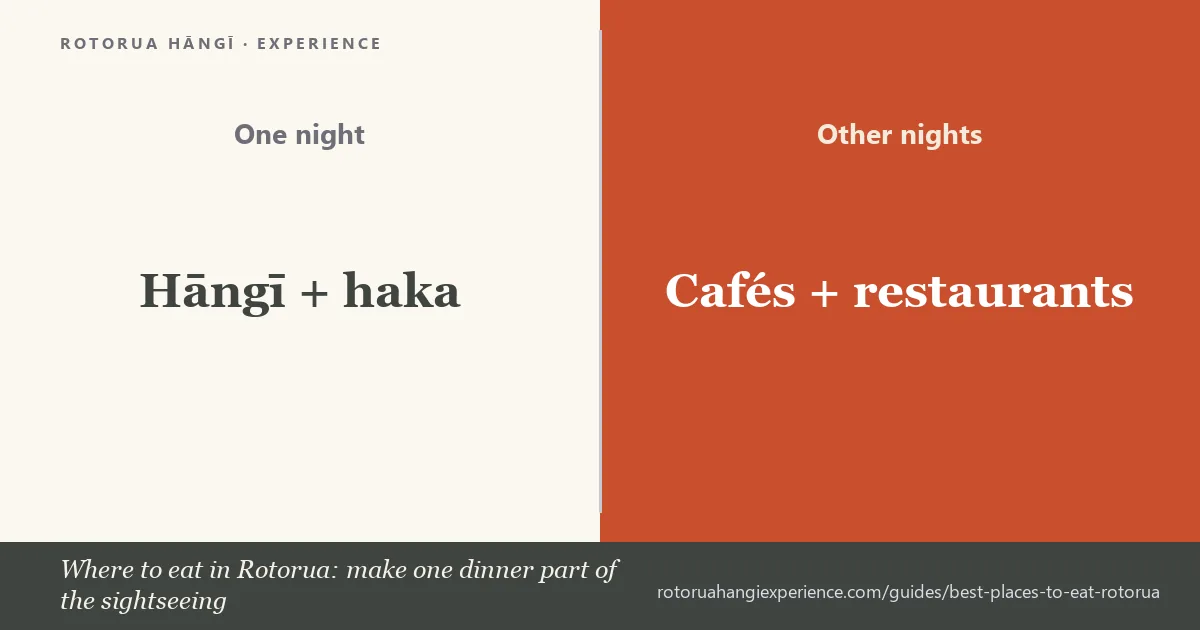
Rotorua has plenty of ordinary restaurants, cafés and takeaways, but the meal you will remember is the one tied to the place: a hāngī lifted from an earth oven, food cooked in geothermal steam, or a Māori cultural evening where dinner is part of the programme. If you have one or two nights in town, make one dinner part of your sightseeing. The Mitai Māori Village evening (from $98, 4.7/5 from more than 4,300 reviews) is where most first-time visitors start, because you watch the hāngī uncovered before you eat it.
Keep the other nights simple, and decide what kind of meal you want tonight before you start looking for a restaurant. This guide covers the main options, from hāngī evenings to casual dining, and which ones to book ahead.
Check Availability
What Food Is Rotorua Known For?
Rotorua is best known for Māori food and hāngī, partly because the city is one of New Zealand’s main centres for Māori cultural tourism. You can find experiences that combine:
- Hāngī
- Māori cultural performances
- Haka
- Storytelling
- Geothermal cooking
- Buffet dinners
- Contemporary Māori-inspired food
The geothermal ground has shaped how food is cooked here too. At Whakarewarewa, residents have cooked with natural steam and hot water for generations, so a meal in Rotorua is often connected to both Māori culture and the geothermal landscape.
What Is a Hāngī?
A hāngī is a traditional Māori method of cooking food on heated stones in an earth oven. The food sits above the stones and cooks slowly in the trapped heat and steam, which traditionally takes several hours. Our guide to what a hāngī is covers the method step by step.
The food varies, but a hāngī meal may include:
- Chicken
- Lamb
- Pork
- Potatoes
- Kūmara
- Pumpkin
- Stuffing
- Other vegetables
Slow cooking leaves the food soft, with an earthy, smoky taste. Commercial hāngī evenings sometimes adapt the traditional process, so the preparation is not identical at every venue, and not every “hāngī dinner” in Rotorua is cooked in the ground.
Is Hāngī a Specific Dish?
Not exactly. Hāngī is a method of cooking, not one recipe, so two Rotorua hāngī evenings can serve different food. One might put out several meats and vegetables; another might pair earth-oven dishes with salads, contemporary plates and desserts. When you compare evenings, read the full menu instead of assuming they all serve the same meal.
Where Can You Eat Hāngī in Rotorua?
Most visitors eat hāngī as part of a Māori cultural evening. These usually run in this order:
- Welcome or introduction
- Māori stories and traditions
- Cultural performance
- Haka
- Dinner
- Hāngī or Māori-inspired dishes
Three operators run evenings in this format, and the mix differs. Mitai (from $98) puts the earth oven and a forest walk at the centre. Te Pā Tū (from $159, 4.8/5 from 1,500+ reviews) leans hardest on food, with a four-course menu. Te Puia’s Te Pō (from $111, 4.7/5 from 500+ reviews) pairs a hāngī buffet with an evening walk to Pōhutu Geyser. Whakarewarewa, the living village, is a daytime visit with geothermal cooking and no evening show. Our comparison of every Rotorua hāngī experience sets them side by side on price, length and reviews.
Is a Māori Cultural Dinner Worth It?
For first-time visitors, usually yes. It costs more than a restaurant meal, but you are paying for an evening’s programme as well as the food. A typical evening includes:
- Cultural interpretation
- Songs
- Haka
- Poi
- Storytelling
- Māori traditions
- Several hours of entertainment
- Dinner
If you already plan to see a Māori cultural performance, a ticket with dinner included uses one evening for both, instead of paying for a show and then going somewhere else to eat.
Best Rotorua Dinner for First-Time Visitors
If you have one evening in Rotorua and Māori culture is part of why you came, book a cultural dinner. You can eat in a restaurant almost anywhere in New Zealand; an evening of Māori culture, haka and hāngī is specific to this town.
You do not have to book one. If you saw a Māori cultural performance during the day, for example the Whakarewarewa cultural performance (from $16, 4.7/5 from 240+ reviews), an ordinary restaurant in the evening makes sense. If you have not, dinner is the easiest slot to fit one in.
Māori Cultural Dinner vs Normal Restaurant
The two do different jobs.
| Māori cultural dinner | Normal restaurant |
|---|---|
| Usually several hours | Usually 1–2 hours |
| Cultural performance included | Food is the main focus |
| Often includes haka | No cultural programme |
| May include hāngī | Standard restaurant cooking |
| Fixed or semi-fixed programme | More flexible arrival time |
| Higher overall price | Wider price range |
| Attraction + meal | Meal only |
Choose a cultural dinner if you want an evening out. Choose a restaurant if you mainly want a meal.
Which Rotorua Māori Dinner Experience Should You Choose?
Price is one factor. Check these too.
1. Is hāngī actually included?
Some listings use loose terms such as “Māori dinner” or “cultural meal”. If eating a traditional hāngī matters to you, check that the word is on the menu. Mitai uncovers its earth oven in front of guests; Te Pā Tū serves chef-designed courses, with a hāngī lifting in its summer programme.
2. Is there a haka?
The major evenings include Māori performing arts, but programmes vary. If the haka is one of the main reasons you are going, confirm it is listed. Our guide to the meaning and history of the haka explains what you will see.
3. How long is the experience?
Evening programmes run for several hours, which matters if you:
- Have young children
- Are arriving in Rotorua late
- Have an early departure next morning
- Are trying to combine several evening activities
4. Is transport included?
Some evenings offer hotel pickup or transfers, which helps when the venue is outside central Rotorua. Mitai offers optional transfers. Our guide to hāngī evenings with hotel pickup lists who collects from where.
5. Is it buffet-style or plated?
Meal formats differ. Some travellers like the choice a buffet gives; others prefer a smaller plated dinner.
6. Are dietary requirements accommodated?
Check before booking if you need:
- Vegetarian food
- Vegan food
- Gluten-free options
- Allergy accommodations
Do not assume a traditional meal can be changed on the night. Our dietary requirements guide goes operator by operator.
What Does Hāngī Taste Like?
Hāngī food is slow-cooked and tender. It cooks in heat and steam, not over a flame, so do not expect the charred edges of a barbecue. People usually describe it as:
- Earthy
- Smoky
- Soft
- Moist
- Slow-cooked
The taste changes with the ingredients and how long the oven stays closed. At a large evening, expect plenty of conventionally cooked dishes on the buffet alongside the hāngī.
Is Hāngī the Same as a Barbecue?
No. Both cook with heat, but a barbecue cooks food over or beside direct heat, while a traditional hāngī uses an earth oven: heated stones and trapped steam cook the food over several hours. The texture and flavour come out different.
What Is Geothermal Cooking in Rotorua?
Geothermal activity has long given Rotorua communities natural heat and hot water. At Whakarewarewa Living Māori Village, the hot pools and steam vents are still part of daily life, and food can be cooked using:
- Natural steam
- Geothermal heat
- Hot water
This is a different method from an underground hāngī, although visitors often hear both called traditional Māori cooking. Keep the difference in mind when you compare attractions. The Whakarewarewa guided village tour (from $24, 4.6/5 from 400+ reviews) includes a corn cob cooked in a geothermal pool.
Hāngī vs Geothermal Cooking
Visitors often mix the two terms up.
Hāngī
Food is traditionally cooked in an earth oven on heated stones.
Geothermal cooking
Natural heat or steam from the ground cooks the food.
In Rotorua you can learn about both. If geothermal cooking interests you most, a living village visit suits you better than a standard dinner show.
What Other Māori Foods Might You Encounter?
A Māori cultural meal can include ingredients from Māori food traditions alongside familiar New Zealand food. Depending on the evening, you might eat:
- Kūmara
- Seafood
- Lamb
- Chicken
- Pork
- Root vegetables
- Bread
- Desserts using local ingredients
Māori cuisine is not limited to hāngī. Contemporary chefs use traditional ingredients and ideas in restaurant-style dishes, as Te Pā Tū’s four-course menu does, so an earth-oven meal is not your only way to taste Māori food.
Best Rotorua Food Experience for Culture
Choose a Māori cultural dinner. It suits you if you want food, haka, storytelling and Māori culture in one evening, and for many visitors it uses the evening better than a restaurant plus a separate cultural attraction. For the most reviewed option, book Mitai; our Mitai guide covers the evening in detail.
Best Rotorua Food Experience for Geothermal Culture
Choose Whakarewarewa Living Māori Village, or another visit that explains geothermal cooking. Here the food shows how the community has used the hot ground in everyday life, so it is less dinner-as-entertainment and more about how people and landscape fit together. Our Whakarewarewa guide covers the tours and the hāngī food sold on site.
Best Rotorua Food Experience for Families
Cultural dinners can suit families well, because children are not stuck at a long restaurant table: there is usually something happening all evening. Children often enjoy:
- Haka
- Poi
- Songs
- Stories
- Demonstrations
- Seeing food being prepared
Check the finishing time first. A long evening can be tiring for very young children, and a hāngī lunch is the gentler alternative.
Best Rotorua Dinner for Couples
Couples have more choice.
Cultural evening
Best on your first visit to Rotorua.
Restaurant dinner
Better if you have already done a cultural experience.
Thermal pools + dinner
Good for a relaxed evening without another organised tour. The Polynesian Spa Deluxe Lake Spa (from $48, 4.5/5 from 404 reviews) sits on the lakefront, a short walk from central restaurants.
Rotorua makes it easy to sightsee during the day and slow down in the evening.
Best Cheap Food in Rotorua
On a budget, you do not need a cultural dinner every night. Central Rotorua has plenty of casual food:
- Cafés
- Takeaways
- Asian restaurants
- Pizza
- Burgers
- Bakeries
- Casual international restaurants
A sensible plan is to spend on one meal you could not have anywhere else and keep the rest simple:
Night 1: Māori cultural dinner
Night 2: casual restaurant or takeaway
You get the experience without every meal becoming a big expense. The cheapest way to taste hāngī is the hāngī pie at Whakarewarewa’s café; our cheapest hāngī guide compares the prices.
Is There an All-You-Can-Eat Buffet in Rotorua?
Yes. Rotorua has buffet restaurants, and some cultural dinners are served as buffets too. Do not pick a Māori cultural evening only for the unlimited food, though. You are paying for:
- Culture
- Performance
- Storytelling
- Food
If you only want a big buffet, an ordinary restaurant is cheaper. If you want hāngī specifically, ask how much of the buffet came out of the earth oven.
Is a Hāngī Buffet Authentic?
Serving style says little about whether a hāngī is authentic. A buffet can still hold food cooked in a hāngī, and guests serving themselves changes nothing about how it was made. Ask instead:
- How was the food prepared?
- Is hāngī actually part of the process?
- Who operates the experience?
- How is the food explained?
- Is the meal presented within meaningful cultural context?
A large evening for hundreds of guests and a small community meal will feel different. Size alone does not make either one more or less legitimate.
Where Should You Eat if You Don’t Want Hāngī?
Rotorua has a broad restaurant scene, so you do not need Māori food at every meal. If you have booked a hāngī evening, try something different on the other nights. Look for:
New Zealand cuisine
Local meat, seafood and seasonal produce.
Asian restaurants
Rotorua has a good spread of Asian food, handy when you want a lighter meal after a heavy one.
Casual cafés
Best for breakfast and lunch.
Lakefront or central dining
Easy if you are staying in central Rotorua and do not want to drive again after dark.
The right restaurant depends on your itinerary and budget more than on any ranking.
Should You Book Dinner in Advance?
For ordinary restaurants, book ahead:
- On Friday and Saturday evenings
- During school holidays
- During major events
- For larger groups
- At popular restaurants
For Māori cultural dinners, booking ahead matters more. They run to fixed programme times, with transport, performers and the meal planned around guest numbers, so they cannot simply turn tables. If one particular evening matters to your trip, book it before you arrive. Our guide to the best time for a Rotorua hāngī covers the busy weeks.
What Time Do Rotorua Cultural Dinners Start?
Start times vary by operator and season. Most evenings begin between 5pm and 7.30pm and last several hours. When you book, note:
- Check-in time
- Actual programme start
- Pickup time
- Dinner time
- Approximate finishing time
- Return transfer time
If you are staying outside central Rotorua, transport adds time at both ends, and you should not hold a restaurant table for the same night.
Can You Book a Hāngī Without a Cultural Show?
Sometimes. Visitors usually meet hāngī as part of a wider cultural evening, partly because the cooking is explained as part of the culture. If you only want to taste it and skip a long programme, look at daytime options: Whakarewarewa’s café sells geothermal hāngī food and the hāngī pie during village opening hours, and Mitai runs a shorter lunch and show. Te Puia’s Pātaka Kai restaurant also sells hāngī buffets at lunch (NZ$60) and dinner (NZ$103) without the show, booked direct; our guide to Rotorua hāngī buffet dinners covers times and booking.
Do not assume an ordinary Rotorua restaurant serves hāngī.
Is Hāngī Suitable for Vegetarians?
Traditional hāngī usually includes meat, but many evenings cater for vegetarians. The alternatives vary, and might include:
- Kūmara
- Potatoes
- Pumpkin
- Other vegetables
- Salads
- Bread
- Additional vegetarian dishes
If you are vegetarian or vegan, read the actual menu before you pay. A generic “dietary requirements accommodated” line is not enough; Mitai’s GetYourGuide listing, for example, says it cannot provide vegan meals.
What About Food Allergies?
Contact the operator before booking if you have a serious food allergy. Large buffets carry a cross-contact risk even when allergen-free dishes are available. Name your allergy specifically instead of writing “dietary requirement” in a booking note, especially when the meal is a large part of a prepaid ticket.
How Much Should You Budget for Food in Rotorua?
Your food budget depends mostly on whether you book a cultural evening. A normal day might be:
- Café breakfast
- Casual lunch
- Restaurant dinner
A Māori cultural dinner costs more because the ticket covers a performance as well as food. Evening tickets on GetYourGuide run from $98 at Mitai to $159 at Te Pā Tū. Do not compare that with a restaurant main course. Compare:
cultural attraction + dinner
with
separate attraction ticket + restaurant meal
That gives you a fair idea of value.
Is a Rotorua Cultural Dinner Tourist-Trappy?
Not necessarily. Rotorua has hosted visitors interested in Māori culture for generations, so tourism is nothing new to its cultural experiences. They do vary a lot: some feel intimate and run by a community, others are large and tightly organised. Neither format is automatically better. Ask what you prefer:
- Small and personal
- Large and polished
- Performance-focused
- Food-focused
- Geothermal setting
- Living village
- Evening entertainment
Choosing by style tells you more than asking whether something is “touristy”.
How to Choose the Best Māori Dinner in Rotorua
Use this checklist before you book.
Choose based on culture if:
You mainly want to understand Māori traditions. Look for:
- Detailed storytelling
- Local guides
- Cultural interpretation
- Māori-owned or community-led experiences
Choose based on performance if:
The haka is your main priority. Look for:
- Kapa haka
- Haka specifically mentioned
- Longer performance programme
Choose based on food if:
Hāngī is your priority. Look for:
- Clear hāngī description
- Menu information
- Cooking-method explanation
- Dietary alternatives
Choose based on convenience if:
You are travelling without a car. Look for:
- Hotel pickup
- Central departure
- Return transport
Choose based on value if:
You want the most for your money. Compare exactly what is included: a dearer ticket can be better value if it covers:
- Transport
- Dinner
- Cultural performance
- Guided activities
- Geothermal attractions
One-Day Rotorua Food & Culture Itinerary
For the whole trip, including how many nights to stay, see our Rotorua itinerary.
With one full day, this order works:
Morning
Visit a geothermal attraction such as Te Puia on the Te Rā guided valley tour (from $57, 4.6/5 from 470+ reviews), Whakarewarewa, Wai-O-Tapu with its entry ticket (from $28, 4.6/5 from 3,274 reviews) or Waimangu on the walk with a Lake Rotomahana cruise (from $102, 4.7/5 from 73 reviews). Our guide to Rotorua’s geothermal experiences compares them.
Lunch
Keep lunch light in central Rotorua.
Afternoon
Walk the lakefront, see another attraction or rest.
Evening
Book a Māori cultural evening with a hāngī dinner.
This keeps the heavy meal and the long cultural programme out of the middle of your day.
Two-Day Rotorua Food Itinerary
Two days give you more room.
Day 1
Lunch: café or casual restaurant
Dinner: Māori cultural evening + hāngī
Day 2
Lunch: a simple meal between sights
Dinner: an independent Rotorua restaurant
You get the cultural meal Rotorua is known for and a taste of the town’s ordinary dining. If you are still choosing between the three big names, our Whakarewarewa vs Te Puia vs Mitai comparison sorts them by what each one does best.
Rotorua Food FAQ
What food is Rotorua famous for?
Māori food, especially hāngī, and cooking with the region’s geothermal heat.
Where can I eat hāngī in Rotorua?
Mostly at Māori cultural evenings, such as Mitai, Te Puia’s Te Pō and Te Pā Tū, not at ordinary restaurants. Whakarewarewa’s café sells hāngī food during the day.
What is hāngī?
A traditional Māori method of slow-cooking food on heated stones in an earth oven.
Is hāngī worth trying?
Yes, especially if you are interested in Māori culture. It makes the most sense as part of a cultural programme that explains the food and where it comes from.
Does a hāngī experience include haka?
Many Rotorua cultural evenings pair hāngī with Māori performance including haka, but inclusions vary, so check the listing before booking.
Is there vegetarian hāngī?
Many evenings offer vegetarian alternatives, but menus vary. Check in advance.
Do you need to book Rotorua restaurants?
Not always, but reservations help at popular restaurants and in busy periods. Book cultural dinners ahead.
Is Rotorua good for food?
Yes. Beyond Māori cultural dining, Rotorua has a broad mix of cafés, restaurants and casual international food.
What’s the best dinner experience in Rotorua?
For a first visit, a Māori cultural evening with performance and hāngī is the meal most specific to Rotorua. Mitai, from $98, is the most reviewed.
Māori Dinner or Restaurant: Which Should You Pick?
| Your priority | Best option |
|---|---|
| Māori culture | Cultural dinner |
| Haka | Cultural performance + dinner |
| Hāngī | Māori food experience |
| Cheap dinner | Casual restaurant |
| Flexible timing | Normal restaurant |
| Family entertainment | Cultural evening |
| Romantic relaxed dinner | Restaurant |
| Geothermal food traditions | Living village experience |
| First visit to Rotorua | Cultural dinner |
| You’ve already done Māori culture | Independent restaurant |
Final Thoughts
Rotorua has plenty of good places to eat, but its most interesting meals are the ones you cannot repeat elsewhere. On a first visit, make one dinner part of the sightseeing: an evening of haka, storytelling and hāngī covers dinner and one of Rotorua’s defining cultural experiences in one go. If you care more about how food connects with the hot ground, spend a morning at Whakarewarewa learning about geothermal cooking and village life. Then use the rest of your stay for the town’s cafés and restaurants.
Decide what you want the meal to add to your trip, whether that is culture, hāngī, geothermal tradition, entertainment or simply good food, and check your dates before you book, because the evening programmes fill first.
See the Hāngī Lifted, Then Sit Down to It
Rotorua's most-reviewed Māori cultural evening — pōwhiri, waka, haka, a hāngī buffet cooked in the ground, and a glow-worm bush walk to finish. Free cancellation up to 24 hours before.
Check Availability & Book